Find your child’s Chinese pathway
Start with your child’s Chinese level. We look at their schoolwork, confidence and gaps, then plan the next skills to build.
IP / Higher Chinese
Depth, detail and clear thinkingWork on deeper comprehension, writing techniques, cultural knowledge and well-developed ideas. Build the language for essays, oral reports and discussion.
Ask about this pathway →G3 Chinese
Turn knowledge into clear answersBuild composition planning, email writing and answers supported by evidence. Link vocabulary to sentences, paragraphs and spoken views.
Ask about this pathway →G2 Chinese
Strengthen the basics, one task at a timePractise word meaning, sentence-building, reading and everyday writing. Break longer questions into smaller steps, then build towards independent answers.
Ask about this pathway →G1 Chinese · Online SSB
Build confidence with guided online practiceOur online SSB class helps G1 Chinese students strengthen everyday vocabulary, reading and expression. We use manageable tasks and guided practice to help them take part and keep progressing.
Ask about this pathway →Whether your child needs stronger basics or more demanding work, our Academic Strategist can help you find a useful starting point. Ask about Marymount or online classes on WhatsApp.
What changes after PSLE Chinese?
Your child will build on the Chinese learnt in primary school. The next step is to use it with less help: plan a story, write a useful reply and explain an answer clearly.
Sec 1 tests are set by each school. The exam marks below compare the published 2026 PSLE formats with the 2027 SEC national exam formats. They show the skills students build towards over secondary school. A child entering Sec 1 in 2027 or 2028 takes the national exam in a later year.
Where do the marks go?
Compare all exam marks · PSLE / G2 / G3 / Higher Chinese
| Exam | Writing 写作 | Language use & reading 语文应用与阅读理解 | Oral 口试 | Listening 听力 |
|---|---|---|---|---|
| PSLE Standard Chinese 0005 · total 200 marks | 40 marks · 20% | 90 marks · 45% | 50 marks · 25% | 20 marks · 10% |
| Secondary G3 Chinese K320 · total 200 marks | 60 marks · 30% Email 20 + composition 40 | 70 marks · 35% | 50 marks · 25% | 20 marks · 10% |
| Secondary G2 Chinese K220 · total 200 marks | 60 marks · 30% Email 20 + composition 40 | 60 marks · 30% | 60 marks · 30% | 20 marks · 10% |
| PSLE Higher Chinese 0015 · total 100 marks | 40 marks · 40% | 60 marks · 60% | No separate HCL oral paper | No separate HCL listening paper |
| Secondary Higher Chinese K355 · total 200 marks | 80 marks · 40% Practical writing 20 + composition 60 | 80 marks · 40% | 40 marks · 20% | No separate listening paper |
For G3 Chinese, writing grows from 20% to 30%
The extra 10% comes from practical writing (实用文), such as email writing (电邮写作). Composition itself stays at 20%. Oral and listening together still make up 35%, so speaking practice matters too.
How long should my child’s composition be?
Based on our years of experience teaching Chinese as former MOE educators, these are SLC’s recommended composition lengths. We count Chinese characters (字数).
| Level | Recommended Chinese characters 字数 |
|---|---|
| PSLE Standard Chinese 华文 | 300–500 |
| PSLE Higher Chinese 高级华文 | 400–800 |
| Secondary G2 Chinese 华文 | 400–600 |
| Secondary G3 Chinese 华文 | 550–1,000 |
| Secondary Higher Chinese 高级华文 | 700–1,000 |
| IP Higher Chinese 高级华文 | 800–2,000 |
We help your child build towards the range for their level, with enough detail to develop the story or explain their ideas. The aim is a complete, well-written piece: relevant content (内容), clear structure (结构) and accurate language (语文).
A longer essay still needs to answer the question (切合题意). We teach children to add useful details and examples, keep to the time given and leave time to check their work. IP students build towards longer pieces as their school tasks become more demanding.
Which tasks are new or more demanding?
Plan without picture panels
PSLE Standard Chinese offers Picture Composition (看图作文) or Topic-based Composition (命题作文). PSLE Higher Chinese offers Topic-based Composition (命题作文) or Continuous Composition (完成文章). Secondary national papers use written prompts. Students build skills in narrative (记叙文), expository (说明文) and argumentative writing (议论文).
Write to a real purpose
Email writing (电邮写作) asks the child to respond to a person and a situation. They must answer the points and give useful reasons. Secondary Higher Chinese also includes an online forum option (网上论坛).
Explain and edit
G3 includes word replacement (词语替换). Higher Chinese includes sentence correction (病句改正) and summary writing (片段缩写). Students also learn to explain meaning and writing techniques (写作手法) using details from the text.
Speak with a clear view
G2 and G3 include reading aloud (朗读短文) and video-based conversation (会话). Secondary Higher Chinese adds an oral report (口头报告) and discussion (讨论). These skills grow through regular speaking practice.
A different way to think about scoring
A good PSLE result is a strong start. It does not mean every new task will feel easy. Primary Chinese already tests thinking and language use; secondary work asks children to do more on their own.
For parents: look at the skill behind the score
Instead of only asking, “Why did your marks drop?”, ask, “Which task cost you marks?” Was it an unclear sentence, a missed email point or a weak explanation? A Sec 1 school score and a PSLE result come from different papers. Look at the teacher’s feedback and the child’s progress.
For students: show why the answer works
Choosing the right MCQ answer still matters. For a written answer, also show the evidence (依据) and explanation (解释). In oral, give a view, a reason and an example. A memorised answer helps only when it fits the question.
For writing: clear ideas earn their place
Good phrases are useful when they fit. First answer the task (切合题意), develop the content (内容) and organise it well (结构). Then improve the language (语文). For G3 composition, content is 20 marks and language with structure is 20 marks.
For revision: use feedback in a new task
More papers can give practice, but the child also needs to learn from each mistake. At SLC, we help them correct the answer, explain the change and try the skill again. Ask, “Can you use what you learnt without help?”
Our aim is to make progress clear. A child who can explain a mistake and apply the correction knows what to work on next. Parents can support that progress without turning every practice session into a test.
Your child knows the words. Can they use them?
As former MOE educators, we have taught in schools and helped students move from Primary 6 to secondary Chinese over the years. Parents often ask why their child did well in PSLE but now finds Chinese hard.
One gap comes up often: children can recognise words but cannot always use them on their own. They may choose the right word in an MCQ or remember a good phrase. But they get stuck when they need to write a sentence, give advice or explain an answer.
This is why we look beyond the PSLE score. We check how your child uses Chinese, then teach the skills they need next.
Four things we check
- Vocabulary use 词语运用: can your child use a word in a new sentence?
- Writing 写作: can they plan a story from a written question?
- Reading comprehension 阅读理解: can they explain an answer in their own words?
- Speaking 口语表达: can they give a view and a reason?
There is still time to rest after PSLE. The aim is to keep some contact with Chinese and build a few useful skills before school starts.
What we see in class—and what we do about it
These are common gaps we have seen in our students, together with feedback from parents.
“I learnt this word, but I forgot how to use it.”
After a long break from Chinese, some children find familiar words hard to recall.
How we helpWe revise the meaning and word combinations (词语搭配). Then we practise sentence-building (造句) and say the sentences aloud.
“I know good phrases, but I have nothing to write.”
A child may remember a model composition but struggle with a new question.
How we helpWe teach them to read the question, plan the content and develop one idea at a time. This is question analysis (审题) and content planning (构思).
“I understand the passage, but I cannot answer.”
Some children can explain an idea in English but cannot put it into Chinese.
How we helpWe find the key point and supporting detail. Then we help the child build a clear answer, step by step.
“My child does not want to revise.”
New friends, CCAs and more subjects can make study time harder to manage.
How we helpWe set a small, clear task and explain its purpose. We review one improvement at a time, so the child knows what to do next.
Paper 1 写作: plan the ideas before writing
In picture composition (看图作文), the pictures give a story sequence. A written question asks your child to choose and organise the events.
Composition 作文: start with the question
经历过一件事后,你发现自己比想象中更坚强。写出事情的经过以及你的感受。After an experience, you realise you are stronger than you thought. Write about what happened and how you felt.
How we teach it
- Understand the question 审题. What change must the story show?
- Plan the events 构思. What challenge does the character face?
- Build the turning point 转折. What choice or action changes things?
- Write the reflection 感想. What did the character learn from this event?
We also teach the right level of detail (详略得当). A difficult choice may need more thoughts and actions. A routine bus ride usually needs only a short mention.
What our school teaching experience tells us
Children who relied on picture panels may find it hard to invent and organise a story. We teach them to read the written prompt, decide what must happen and show how the character changes. Our feedback looks at content (内容), language (语文) and structure (结构).
Four ways we help the writing grow
- 1Choose the right detail 详略得当
Spend more words on the key moment. Keep routine actions short.
- 2Show the character 描写方式
Use actions, speech and thoughts to show what the person is going through.
- 3Use language with purpose 修辞手法
Try a suitable comparison or other device when it helps the reader picture the scene.
- 4Make the reflection clear 感想
Explain what the character learnt. Link the lesson to what happened.
Email writing 电邮写作: answer the person’s concern
In practical writing (实用文), your child needs to know who they are writing to and why. A nice opening is not enough. The reply must answer the questions and explain useful suggestions.
Turn familiar themes into useful replies
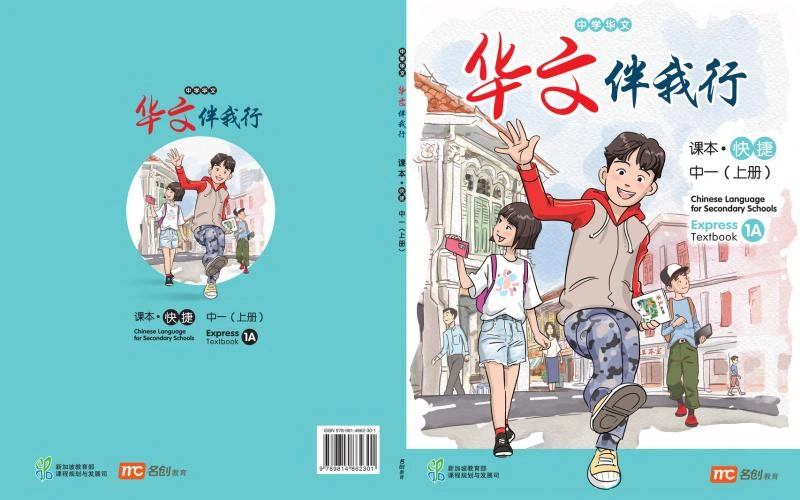
In our Sec 1 teaching, we use themes from school life and the 华文伴我行 learning materials to help children discuss real situations. These are themes we have worked on with students:
Making friends, settling in and asking for help.
Family gatherings, traditions and understanding others.
Local places, community life and shared experiences.
Building good habits and taking responsibility.
How new ideas and technology affect daily life.
Recognising people who help the community.
- 1Understand the concern 读懂问题
Who needs help? What are they asking?
- 2Give a practical suggestion 提出建议
Say what the person can do.
- 3Explain why 说明理由
Show how the suggestion helps.
勇敢踏出舒适区,与他人进行沟通。
Step out of your comfort zone and talk to others.
We help the child turn this into advice: start by greeting one classmate, then ask about a shared interest. The idea becomes specific enough for an email reply.
阅读以下电邮,写一封回复电邮,回应来信中的问题。
小文:
升上中一后,我还没有交到新朋友。下课时,我常常一个人坐在座位上。我想参加课外活动,却担心自己做得不好。
你认为我可以怎样认识新朋友?我应该怎样选择适合自己的课外活动?希望你能给我一些建议。
明华
What we teach: find the two questions in the email. Give a useful suggestion for each one, then explain why it helps.
你应该多参加活动。
“You should take part in more activities.”
你可以先参加自己感兴趣的课外活动。和有共同兴趣的同学相处,会更容易找到话题,也能慢慢建立友谊。
The child now explains what to do and why it may help them make friends.
How much should my child write?
We first look for a complete story or reply that answers the question. Then we work on detail, clear sentences and writing within the time given. We use the recommended composition ranges above to guide practice, then build the child’s detail, structure and language step by step.
Paper 2 语文应用与阅读理解: show how you reached the answer
Secondary Chinese includes stories, factual texts and texts that explain a view. Students need to understand the words, find the key ideas and explain their answers.
| Task | Common gap | Teaching focus |
|---|---|---|
| Language use 语文应用 | The word is familiar, but the sentence is unclear. | Word meaning, word combinations and sentence structure. |
| MCQ comprehension 选择题 | Two answers look right. | Check each choice against the text. Explain why the other choices do not fit. |
| Open-ended answers 开放式问答 | The child copies a line but does not explain it. | Find the evidence and explain the link to the question. |
| Writing techniques 写作手法 | The child names a technique but cannot explain its effect. | Link the exact words to the person, feeling or idea in the passage. |
There are still MCQs in secondary Chinese. But knowing familiar words is only part of the task. Your child also needs to read closely and think about the meaning.
From finding the answer to explaining how the writing works
A question may ask who took a bag and why. A more demanding question may ask, “What descriptive technique is used in this paragraph? What is its effect?” (这一段使用了什么描写方式?有什么作用?)
From our experience teaching and marking in schools, a technique name alone does not show enough understanding. We teach children to explain the exact words, the feeling or idea they show, and how that answers the question.
- 1Name it 辨认手法
Identify the relevant descriptive technique or literary device.
- 2Point to the words 找出依据
Choose a short detail from the passage.
- 3Explain the effect 解释作用
Say what it shows about the person, feeling or main idea.
Why we break down model answers
A polished answer can look easy to an adult who speaks Mandarin. A child with less exposure may not know how to build it. We show the steps in simple language, practise one part at a time and use schoolwork and teacher feedback to focus the practice. The child learns to explain an idea, rather than memorise a difficult answer.
See a short comprehension example
轮到我发言时,我心里不停地想:要是说错了,同学会不会笑我?我深吸了一口气,抬起头,决定先说出第一句话。
“我”发言前感到紧张,主要是因为:
作者运用了什么描写方式来表现自己的心理?这种描写有什么作用?
For Q1: the answer is 3. We ask the child to show which words support it, rather than only give a number.
For Q2: explain psychological description 心理描写
This technique shows a character’s thoughts and feelings. Naming it is the first step. The child must also explain what it shows in this passage.
作者运用了心理描写,让文章更生动。
“The writer uses psychological description to make the passage more vivid.”
This does not explain the character’s feeling.
作者通过“同学会不会笑我”的内心疑问,表现自己担心出错、害怕被嘲笑的紧张心理。这与后文主动开口的行动形成对比,突出他克服恐惧的转变。
The answer points to the character’s fear of being laughed at. It then links this fear to the later choice to speak.
Our teaching routine is simple: find the words → explain the meaning → link it to the question.
Higher Chinese: summary writing 片段缩写
A summary keeps the main ideas and leaves out extra detail. We teach students to spot the key points, combine related points and remove repeated ideas.
The published 2027 SEC Higher Chinese format includes a summary of about 80 Chinese characters. These skills are built over the secondary years. In Sec 1, we start with the child’s current reading and writing.
Oral 口试: have a view, a reason and an example
Many children mainly speak English at home and with friends. They may know what they want to say but lack the Chinese words.
We link vocabulary to short discussions about school, friendships, technology and daily life. Students practise three steps:
- Give a view 表达看法. What do you think?
- Explain the reason 说明理由. Why do you think so?
- Add an example 举例说明. What have you seen, read or experienced?
For example, “we should keep the neighbourhood clean” is a start. Your child can then explain who is affected and suggest one action that would help.
At home, try one short chat in Mandarin. Ask a follow-up question and give your child time to answer.
Current affairs 时事: give children something to say
Some children have the vocabulary for a school story but get stuck when asked about society. We connect short news stories to daily life, then practise a view, a reason and a real example. This supports oral, email and composition work.
Discuss how technology changes study and communication.
Talk about food waste, recycling and small daily choices.
Explore how people from different backgrounds live and help one another.
学校可以在食堂设置食物回收站,并教导学生按需要取餐。这样能减少浪费,也能培养珍惜食物的习惯。
A school can set up a food-waste collection point and teach students to take only what they need. This can reduce waste and build the habit of valuing food.
How we teach it: learn the keywords → explain one action → give the reason. We add detail as the child’s language grows.
Idioms 成语 and cultural stories 典故: understand, then apply
In school teaching, we have seen children read every word but still miss the meaning of an idiom or a historical reference. We explain the story and meaning first, then connect it to the passage or writing task.
Our experience includes teaching from secondary Chinese idiom lists, including the familiar 250-idiom practice lists (中学250个成语). The useful skill is applying an idiom in the right context.
Choose an idiom that fits the situation.
Use the surrounding sentences to work out meaning.
Show the meaning through a clear example.
Finish a sentence in a way that fits the idea.
As students progress, we show how a cultural story or quotation can support an argument (引用论证). We explain the background in simple terms so children can follow the idea and use it meaningfully.
You do not need to speak Mandarin to support your child
We have taught children from ethnic Chinese, Indian, Filipino and Korean families, including homes where Mandarin is rarely spoken. We understand that parents may want to help but cannot explain a Chinese passage or correct a composition.
- 1Start where the child is 从现有基础开始
We check what they understand, can read and can say.
- 2Make the meaning clear 理解意思
We use simple explanations and English where helpful, then practise saying and writing the idea in Chinese.
- 3Build regular practice 持续练习
We guide reading, sentence-building and speaking in manageable steps.
At home, you can ask what your child learnt and let them explain it to you. You can encourage the routine without having to teach the lesson yourself.
Talk to our Academic Strategist →A simple plan after PSLE
Your child can rest and still do some useful practice. Focus on a few skills that will help when school starts.
Find the gaps
Check word use, sentences, writing and answers. Ask your child what feels hard.
Practise the next skills
Use a word in a sentence. Build an idea into a paragraph. Explain an answer.
Build a routine that lasts
Review the feedback. Try a new task. Check if your child can do it with less help.
Ask about our Post-PSLE and Secondary 1 bridging support, or ongoing Core Banded Classes. Our Academic Strategist will help you choose based on your child’s work and timetable.
Discuss my child’s Secondary 1 ChineseWhat former secondary students say
Ng Yilong
Google review“Attended SLC in Sec 4 and my chinese grades has improved alot.”
Excerpt · original words
YW Y
Google review“my Higher Chinese grades improved from being able to barely pass to an A2 in o levels.”
Excerpt · original words
How our Academic Strategist can help
WhatsApp us your child’s level, Sec 1 entry year and main concern.
- Get a clear recommendation. Find out what your child should work on first.
- See how the teaching works. Ask how lessons work, how we give feedback and how to start.
- Find a manageable arrangement. Choose from Marymount and online class options.
- Understand the details. Get the class times, lesson length and fees before you decide.
A recent Chinese paper or composition helps us understand your child. You can still contact us if you do not have one ready.
WhatsApp: +65 8373 3016
WhatsApp our Academic StrategistQuestions parents ask after PSLE
My child did well in PSLE Chinese. Do they still need bridging?
They may need help with new writing and reading tasks. We first look at what they can do, then suggest the next step.
My child has struggled with Chinese for years. Will the class be too difficult?
Tell us what your child finds hard. We can discuss the right class and build the skills in small steps.
Can my child rest after PSLE?
Yes. Leave time for rest, family and other interests. Choose a study routine your child can keep up.
Do you offer online classes?
We offer Chinese learning at Marymount and online. WhatsApp our Academic Strategist for the classes and timings that fit your child’s level.
Is this guide for students entering Secondary 1 in 2027 or 2028?
Both. Tell us the year your child starts Sec 1 and their Chinese level, so we can suggest suitable support.